
Ecommerce SEO Pricing: Complete Cost Guide (2026)

Ecommerce SEO is one of the most valuable long-term investments for online businesses looking to attract more customers through organic search. However, before hiring an SEO professional or agency, most store owners want to understand one important thing: how much does ecommerce SEO cost, and what should they expect to receive for their investment?
The cost of ecommerce SEO can vary significantly depending on your website’s size, product catalog, competition, technical condition, and growth objectives. A small online store with 50 products may need a relatively straightforward optimization strategy, while a large ecommerce website with thousands of product pages may require advanced technical SEO, extensive content development, and ongoing authority building.
Understanding ecommerce SEO pricing helps you choose the right services without spending more than your business needs. It also helps you compare agencies, evaluate different packages, and identify whether a proposed SEO budget can realistically support your growth goals.
In this guide, we’ll explain ecommerce SEO costs, monthly pricing models, agency packages, included services, platform-specific expenses, and the factors that influence your total investment. You’ll also learn how to choose an affordable ecommerce SEO package that delivers meaningful long-term value for your online store.
How Much Does Ecommerce SEO Cost in 2026?
Ecommerce SEO pricing typically ranges from approximately $500 to $7,500 per month for many US businesses, although larger stores and highly competitive ecommerce brands may require budgets exceeding $10,000 per month.
Your actual ecommerce SEO services cost depends on the amount of work required, the experience of your provider, and the level of competition in your industry. A business targeting a small local market will generally have different requirements from a national retailer competing against established ecommerce brands.
Here is a general overview of common ecommerce SEO pricing models:
| SEO Pricing Model | Estimated Cost | Best For |
| Monthly SEO retainer | 500–7,500+ per month | Ongoing SEO growth |
| Hourly SEO consulting | 25–150+ per hour | Specific SEO assistance |
| Project-based SEO | 500–5,000+ | Audits and defined improvements |
| Enterprise SEO | 7,500–20,000+ per month | Large and complex ecommerce websites |
For most growing online stores, ongoing SEO is worth considering because ecommerce optimization involves continuous improvements to product pages, category pages, technical performance, content, and website authority.
What Is the Average Cost of Ecommerce SEO per Month?
There is no single average that applies to every ecommerce business. However, a monthly budget between $1,000 and $5,000 can provide a useful starting point for many small and growing online stores, depending on their competition and requirements.
Smaller stores may begin with a limited optimization campaign, while established businesses often need more resources for technical improvements, content production, and competitive keyword targeting.
The important consideration is not simply how much you pay each month. It is whether the services included in that budget address your website’s most important SEO opportunities.
Ecommerce SEO Pricing Models Explained
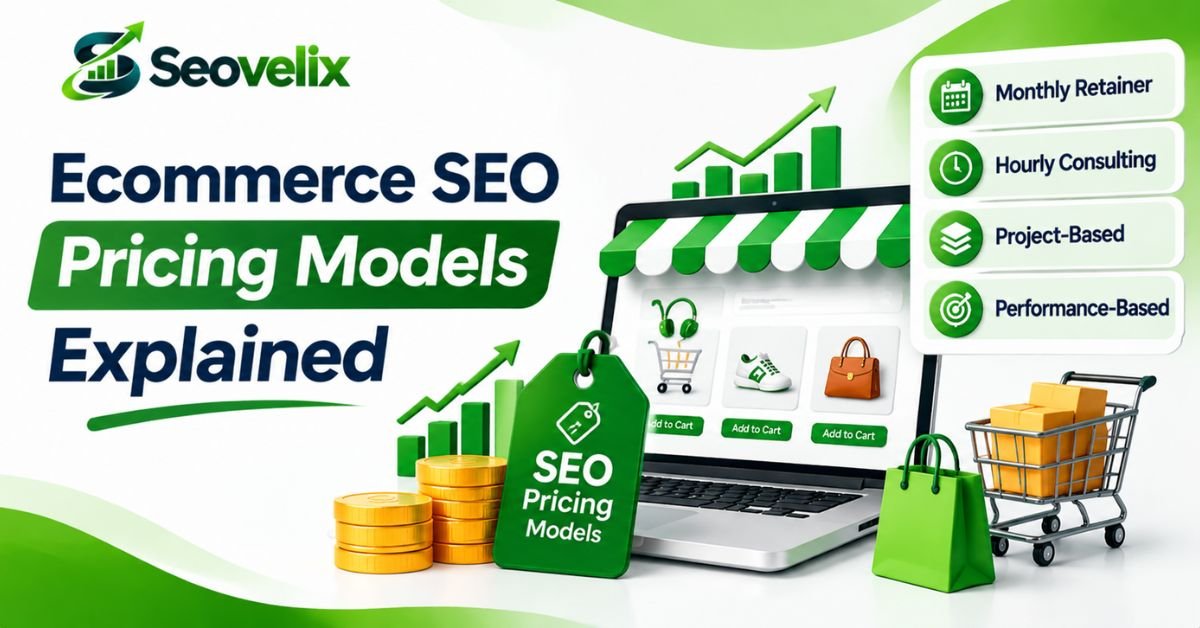
SEO providers use different pricing structures depending on the type of work, project complexity, and expected level of involvement. Understanding these models makes it easier to determine which arrangement suits your business.
1. Monthly Ecommerce SEO Retainer Cost
A monthly retainer is one of the most common arrangements for ongoing ecommerce SEO services. Under this model, you pay an agreed amount every month in exchange for a defined set of optimization activities.
The ecommerce SEO monthly retainer cost generally depends on the number of products, website size, target keywords, competition, and required monthly deliverables.
A typical monthly engagement may include:
- Technical SEO monitoring and improvements.
- Product and category page optimization.
- Ecommerce keyword research.
- Content planning and development.
- Internal linking improvements.
- Link-building activities.
- Competitor analysis.
- Monthly performance reporting.
Monthly retainers are particularly useful for businesses that want to improve their organic visibility over time rather than solve a single technical problem.
For example, a growing clothing store might initially prioritize category page optimization and product keyword research. As its organic visibility improves, the strategy could expand to buying guides, product comparisons, and authority-building campaigns.
Before choosing a retainer, confirm exactly how many pages, content pieces, technical tasks, and other deliverables are included.
2. Ecommerce SEO Consultant Hourly Rate
Some businesses prefer hiring an SEO consultant for specific tasks instead of committing to a monthly agreement.
The ecommerce SEO consultant hourly rate can range from approximately $25 to $150 or more, depending on the consultant’s experience, location, specialization, and project complexity.
Hourly consulting may cover:
- Ecommerce SEO audits.
- Keyword research.
- Technical SEO troubleshooting.
- Website migration advice.
- Product page optimization recommendations.
- SEO strategy development.
- Staff training and consultation.
This approach can work well when your business already has an internal marketing or development team capable of implementing recommendations.
However, hourly consulting does not necessarily include implementation. Clarify whether the consultant will only provide advice or also complete the optimization work.
3. Project-Based Ecommerce SEO Pricing
Project-based pricing is suitable when you need a clearly defined SEO service with a specific beginning and end.
You decide on a set amount for finishing a certain job rather than paying a regular monthly cost.
Common project-based services include:
- Comprehensive ecommerce SEO audits.
- Website migration SEO.
- Technical SEO corrections.
- Category architecture improvements.
- Product page optimization.
- Ecommerce keyword mapping.
- Structured data implementation.
For example, a store migrating from WooCommerce to Shopify may require a one-time SEO migration project covering URL mapping, redirects, metadata, indexing checks, and post-launch monitoring.
Project-based ecommerce SEO pricing works best when the scope is clearly documented. Large projects should include milestones, responsibilities, timelines, and acceptance criteria.
4. Performance-Based SEO Pricing
Some SEO providers offer performance-based arrangements where part of their compensation depends on agreed performance targets.
These arrangements may be linked to organic traffic, qualified leads, revenue, or other measurable outcomes.
Although performance-based pricing may sound attractive, it requires careful evaluation.
Organic rankings are influenced by many factors outside an agency’s control, including search engine changes, competitors, website development, product availability, and market demand.
Before signing an agreement, establish:
- Which performance metrics determine payment.
- How organic revenue will be attributed.
- Whether branded searches are included.
- How seasonal changes are handled.
- What happens when tracking data is incomplete.
- Whether the agreement includes a fixed service fee.
Avoid providers that promise guaranteed rankings or offer payment arrangements based on vague performance definitions.
Ecommerce SEO Packages Pricing: What Do You Get at Different Price Points?
Ecommerce SEO packages pricing varies according to the level of service, monthly workload, and complexity of the website.
A package should not be evaluated by its name alone. A Starter package from one provider may include only keyword research and basic on-page optimization, while another may include technical improvements, content, and ongoing reporting.
The following pricing tiers provide illustrative budgeting guidance for businesses comparing ecommerce SEO packages.
| Package Type | Estimated Monthly Price | Suitable For |
| Starter | 500–1,000 | Small stores |
| Growth | 1,000–2,500 | Growing ecommerce businesses |
| Advanced | 2,500–5,000 | Established online retailers |
| Enterprise | 5,000–10,000+ | Large ecommerce websites |
These are suggested service-budget categories, not official Seovelix package prices.
Starter Ecommerce SEO Package
Estimated budget: $500–$1,000 per month
A Starter package is generally suitable for new online stores or small businesses with limited product catalogs and relatively low keyword competition.
The main objective is to establish a strong SEO foundation.
Possible deliverables include:
- Basic technical SEO review.
- Initial ecommerce keyword research.
- Homepage optimization.
- Selected product page optimization.
- Basic category page improvements.
- Metadata recommendations.
- Internal linking improvements.
- Basic monthly reporting.
A small store selling handmade accessories, for example, may benefit from improving its product titles, category descriptions, and website indexing before investing in a large content campaign.
A Starter package should focus on the highest-priority opportunities rather than promising extensive optimization across hundreds of pages.
Growth Ecommerce SEO Package
Estimated budget: $1,000–$2,500 per month
A Growth package is suitable for businesses with an established product catalog that want to increase organic traffic and compete for more commercial search terms.
At this level, SEO activities can expand beyond basic website optimization.
Possible deliverables include:
- Detailed technical SEO analysis.
- Product and category keyword mapping.
- Product page optimization.
- Category page content improvements.
- Regular SEO content development.
- Internal linking strategy.
- Competitor research.
- Relevant link acquisition.
- Search performance monitoring.
For example, an online furniture retailer may target keywords related to sofas, dining tables, office chairs, and bedroom furniture.
Rather than optimizing only individual products, the campaign can develop category pages and supporting buying guides that address different stages of the customer’s purchasing journey.
Advanced Ecommerce SEO Package
Estimated budget: $2,500–$5,000 per month
Advanced SEO is designed for established online retailers operating in competitive markets or managing larger product catalogs.
These businesses often need more comprehensive optimization across technical SEO, content, product categories, and website authority.
Possible deliverables include:
- Advanced technical SEO audits.
- Crawl budget and indexation analysis.
- Faceted navigation optimization.
- Large-scale product and category optimization.
- Content strategy and editorial planning.
- Digital PR and link-building campaigns.
- Structured data improvements.
- Competitor gap analysis.
- Organic conversion tracking.
- Detailed performance reporting.
At this level, the objective is to improve the entire organic search ecosystem rather than optimize a handful of individual pages.
Enterprise Ecommerce SEO Package
Estimated budget: $5,000–$10,000+ per month
Enterprise ecommerce SEO is intended for large retailers, multi-category businesses, and brands operating across multiple markets.
These websites may contain thousands of product URLs, multiple languages, complicated navigation systems, and significant technical requirements.
Possible services include:
- Large-scale technical SEO management.
- International SEO.
- Advanced website architecture planning.
- Product catalog optimization.
- Complex migration support.
- Scalable content operations.
- Digital PR and authority development.
- Advanced analytics and attribution.
- Ongoing technical collaboration.
- Enterprise-level reporting.
The scope should be customized around the website’s architecture, business objectives, and available development resources.
What Is Included in an Ecommerce SEO Package?
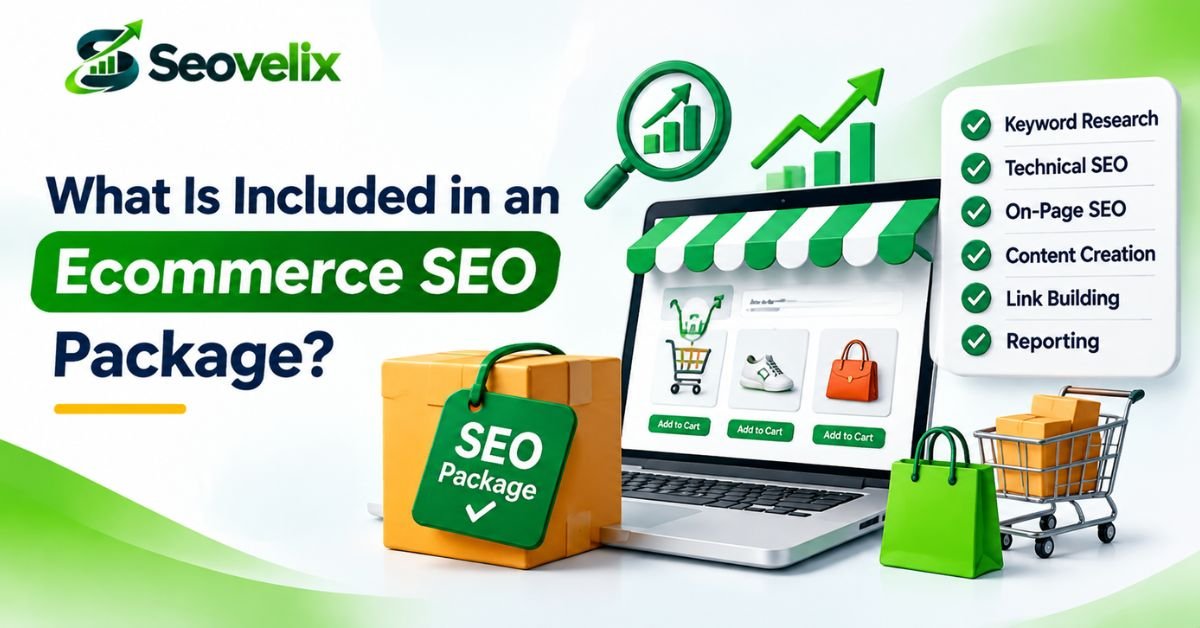
Understanding what is included in an ecommerce SEO package is essential when comparing different providers.
Professional ecommerce SEO involves several interconnected activities. Simply adding keywords to product descriptions is not enough to build sustainable organic visibility.
A comprehensive campaign should consider the following services.
Ecommerce Keyword Research
Keyword research finds the search phrases that prospective buyers use to find products, categories, solutions, and purchasing information.
For an ecommerce website, keyword research should distinguish between different search intents.
For example:
- Transactional: Buy leather office chairs.
- Commercial: Best ergonomic office chairs.
- Informational: How to choose an office chair.
- Category-focused: Office chairs for home offices.
The goal is to match appropriate keywords with the most relevant pages.
Product keywords should generally target individual product pages, while broader commercial keywords are often better suited to category pages.
Technical Ecommerce SEO
Technical SEO guaranties that search engines can find, crawl, understand, and index important website pages.
Ecommerce websites frequently face technical challenges because product catalogs, filters, sorting options, and URL parameters can create complicated website structures.
Technical optimization may include:
- XML sitemap configuration.
- Robots.txt review.
- Canonical tag implementation.
- Duplicate URL management.
- Crawlability and indexability improvements.
- Mobile usability.
- Page speed optimization.
- Core Web Vitals analysis.
- Redirect management.
- Faceted navigation controls.
For example, a store allowing customers to filter products by color, size, brand, and price may generate numerous URL combinations.
Without proper management, these URLs can create duplicate or low-value pages that consume crawling resources.
Product Page SEO
Product pages are important because they connect search visibility with purchasing opportunities.
Effective product page optimization includes:
- Descriptive product titles.
- Unique product descriptions.
- Relevant keyword targeting.
- Optimized image filenames and alt text.
- Product specifications.
- Customer review content.
- Appropriate internal links.
- Product structured data.
Avoid copying manufacturer descriptions across hundreds of products. Unique, useful descriptions help customers understand product features and make purchasing decisions.
Category Page SEO
Category pages organize products and help customers discover relevant items.
They can also target broader commercial search terms that individual product pages may not address effectively.
Category optimization may include:
- Keyword-focused category titles.
- Helpful introductory descriptions.
- Relevant product organization.
- Descriptive heading structures.
- Internal links to related categories.
- Appropriate product filtering.
- Unique and useful category content.
For example, an electronics retailer could optimize separate category pages for gaming laptops, business laptops, student laptops, and lightweight laptops.
Ecommerce Content Marketing
Content marketing supports ecommerce SEO by answering customer questions and attracting people researching products before purchasing.
Common content formats include:
- Product buying guides.
- Product comparison articles.
- How-to guides.
- Product care instructions.
- Educational articles.
- Frequently asked questions.
- Industry-specific resources.
For example, a skincare store could publish an article explaining how to choose a moisturizer for different skin types.
The article could naturally link to relevant product and category pages, helping readers move from information to product discovery.
Link Building and Digital PR
Backlinks from relevant, trustworthy websites can help establish website authority and support organic search visibility.
Ecommerce link-building activities may include:
- Relevant industry publications.
- Product reviews and editorial coverage.
- Digital PR campaigns.
- Useful resource development.
- Brand mentions.
- Relevant partnership opportunities.
Quality and relevance matter more than simply acquiring a large number of links.
Avoid automated link schemes, paid link arrangements intended to manipulate rankings, and irrelevant backlink packages.
SEO Reporting and Analytics
Reporting helps businesses understand whether their SEO investment is producing meaningful improvements.
A useful reporting process may monitor:
- Organic search clicks and impressions.
- Keyword visibility.
- Indexed product and category pages.
- Organic landing page performance.
- Organic conversions.
- Ecommerce revenue from organic traffic.
- Technical SEO issues.
- Progress against agreed objectives.
Google Search Console and Google Analytics 4 are useful tools for monitoring different aspects of organic search performance and website activity.
What Factors Affect Ecommerce SEO Pricing?
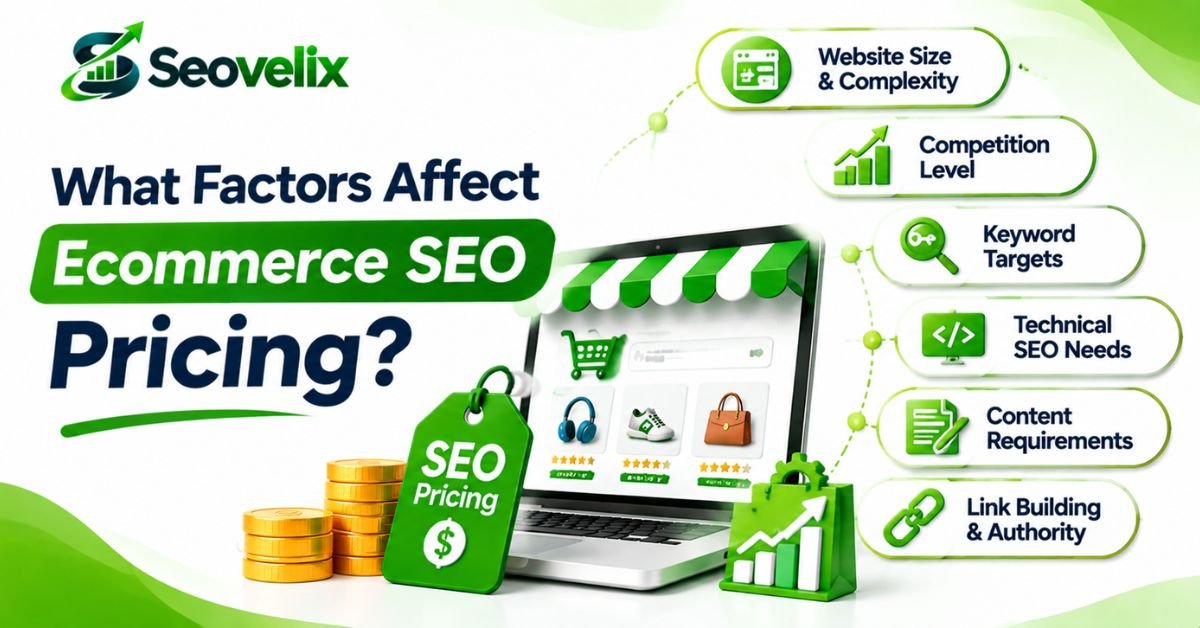
Two ecommerce businesses can receive very different SEO quotes even when they operate on the same platform. This happens because pricing depends on the amount of work required to achieve each business’s objectives.
Understanding the main cost factors helps you evaluate proposals and decide where your budget should go.
1. Product Catalog Size
The number of products on your website is one of the most important factors affecting ecommerce SEO pricing.
A store with 50 products may require optimization for a relatively small number of product and category pages. A store with 5,000 products may need large-scale keyword mapping, duplicate content management, structured data improvements, and automated optimization processes.
More products do not automatically mean proportionally higher costs. Product templates, catalog structure, and automation can make large-scale optimization more efficient.
2. Keyword Competition
Some ecommerce industries are considerably more competitive than others.
For example, ranking for a specific handmade jewelry product may be easier than competing for broad terms such as running shoes, smartphones, or furniture.
Highly competitive keywords generally require more strategic planning, better content, stronger website authority, and ongoing optimization.
3. Website Platform and Technical Structure
Your ecommerce platform can influence the amount of technical work required.
Some platforms provide built-in SEO features, while others require additional configuration or custom development.
Complicated URL structures, filtering systems, duplicate pages, and migration requirements can increase project costs.
4. Target Market and Geographic Reach
A business targeting customers in one city generally has different SEO requirements from a retailer targeting customers throughout the United States or multiple countries.
International ecommerce SEO may require:
- Country-specific keyword research.
- Multilingual content optimization.
- Hreflang implementation.
- International URL structures.
- Regional search intent analysis.
- Market-specific content strategies.
These additional requirements can increase the overall budget.
5. Content Development Requirements
Content is another major factor influencing SEO costs.
A store with existing high-quality product descriptions and category content may need fewer content improvements than a website with hundreds of thin or duplicate pages.
Your budget may need to cover content research, writing, editing, product descriptions, buying guides, and category page development.
6. Website’s Existing SEO Condition
A website with serious technical issues may require more initial investment than a well-optimized store.
For example, unresolved indexing problems, broken redirects, duplicate pages, poor internal linking, and website migration errors can require significant technical attention before a broader SEO campaign begins.
This is why an initial SEO audit is important before finalizing a service budget.
Following Google’s Product Structured Data Guidelines can help ecommerce websites provide search engines with detailed product information, including prices, availability, and ratings where eligible.
Ecommerce SEO Cost by Website Platform
The ecommerce platform you use can affect your optimization requirements, but it does not independently determine the price of SEO services.
The actual cost depends on website size, technical complexity, competition, catalog structure, and the scope of work.
How Much Does Shopify SEO Cost?
Shopify SEO pricing varies depending on the store’s product count, theme, installed applications, competition, and optimization requirements.
A smaller Shopify store may need product and collection page optimization, keyword research, metadata improvements, and technical configuration.
Larger Shopify stores may require more advanced work involving:
- Collection and product URL optimization.
- Duplicate content management.
- Canonical tag checks.
- Structured data.
- Filter and search URL management.
- Shopify theme performance.
- Internal linking.
- Migration and redirect management.
Shopify provides a number of built-in SEO features, but having an SEO-friendly platform does not guarantee strong organic rankings.
The cost of Shopify SEO should therefore be based on the work required rather than simply the platform name.
WooCommerce SEO Pricing
WooCommerce offers flexibility through WordPress, plugins, themes, and custom development.
However, that flexibility can create additional SEO management requirements.
A WooCommerce SEO campaign may involve optimizing product categories, managing product attributes, improving page performance, configuring structured data, and addressing plugin-related technical issues.
The complexity of the store and its existing WordPress setup will influence the final cost.
Magento SEO Pricing
Magento, now known as Adobe Commerce, is often used for larger and more complex ecommerce operations.
Magento websites may require advanced technical SEO expertise because of their product catalogs, layered navigation, URL configurations, and custom functionality.
SEO work may involve crawl management, canonicalization, structured data, international SEO, and coordination with development teams.
These requirements can make Magento SEO more resource-intensive than a straightforward small ecommerce project.
BigCommerce SEO Pricing
BigCommerce provides several built-in SEO capabilities, but stores still need strategic keyword targeting, product optimization, category content, technical monitoring, and authority development.
The final pricing depends on catalog size, competition, technical requirements, and the amount of ongoing optimization needed.
DIY Ecommerce SEO vs Hiring an SEO Agency
Ecommerce businesses generally have four options when managing SEO: doing it themselves, hiring a freelancer, working with an agency, or building an in-house team.
Each approach has different costs and operational requirements.
| Approach | Cost Structure | Best For |
| DIY SEO | Tools and personal time | Very small stores |
| SEO freelancer | Hourly or monthly fees | Specific SEO tasks |
| SEO agency | Monthly retainer or project | Ongoing professional support |
| In-house SEO team | Salaries, tools, and training | Larger businesses |
Doing SEO Yourself
DIY SEO can be suitable for new stores with limited budgets.
Business owners can learn keyword research, optimize product descriptions, improve titles, publish useful content, and monitor website performance.
However, technical SEO, large-scale optimization, and competitive link-building campaigns may require specialist knowledge and significant time.
Hiring an Ecommerce SEO Freelancer
A freelancer can provide focused expertise at a potentially lower cost than a full-service agency.
This approach works well for specific projects such as keyword research, technical audits, content optimization, and SEO consulting.
However, one person may not have the capacity to manage every aspect of a large ecommerce campaign.
Hiring an Ecommerce SEO Agency
An agency can provide access to different areas of expertise, including technical SEO, content strategy, keyword research, and link acquisition.
This can be useful for businesses that need coordinated, ongoing SEO support.
However, agency quality varies. Evaluate the actual team, deliverables, communication process, and relevant ecommerce experience before making a decision.
Building an In-House SEO Team
Large ecommerce businesses may benefit from employing dedicated SEO professionals.
An internal team can work closely with developers, content creators, product managers, and marketing departments.
However, salaries, recruitment, software subscriptions, and ongoing training can make this a significant investment.
How Long Does Ecommerce SEO Take to Show Results?
Ecommerce SEO is a long-term growth strategy rather than an immediate traffic solution.
Some improvements, such as correcting broken links, updating metadata, or fixing indexing problems, can be implemented relatively quickly. However, meaningful improvements in organic rankings, traffic, and revenue may take several months.
A general planning timeline looks like this:
| Period | Potential SEO Activities |
| Month 1 | SEO audit, research, and strategy development |
| Months 2–3 | Technical fixes and priority page optimization |
| Months 3–6 | Content development and broader optimization |
| Months 6–12 | Continued authority building and performance improvements |
This timeline is illustrative, not a guaranteed results schedule. Established websites with technical problems may need a different approach from new stores entering competitive markets.
Progress should be evaluated through relevant metrics, including organic traffic, qualified visitors, keyword visibility, product page performance, and organic conversions.
How to Choose an Affordable Ecommerce SEO Package
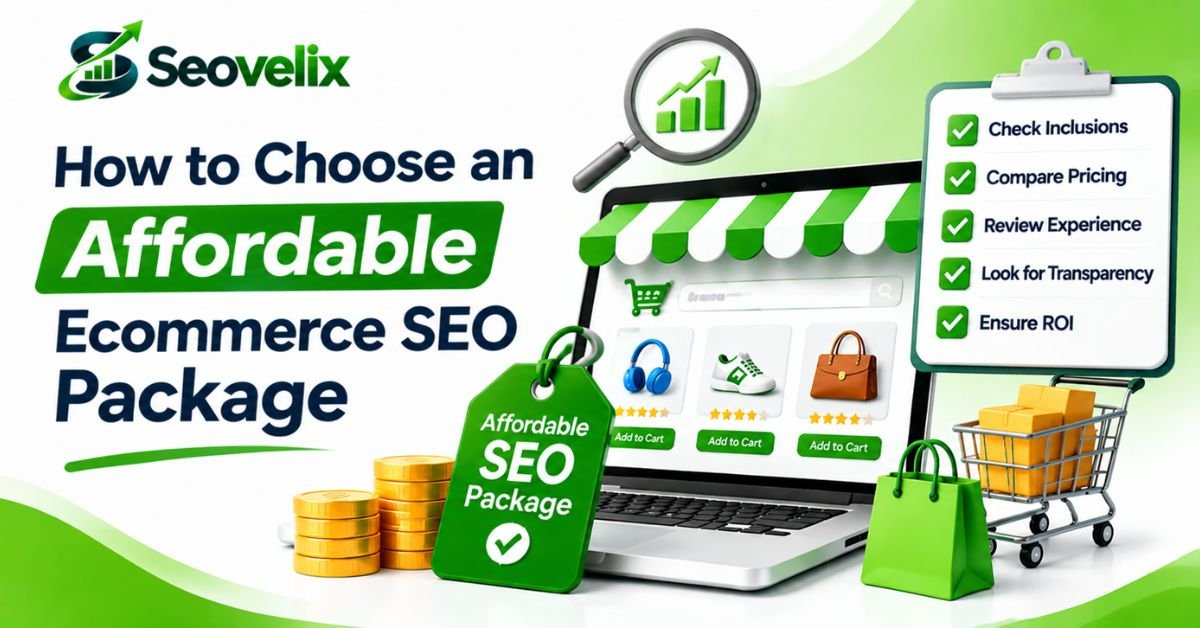
Finding affordable ecommerce SEO packages does not necessarily mean choosing the cheapest provider. The right package should offer enough expertise, implementation support, and ongoing optimization to address your store’s actual requirements.
Before selecting an SEO provider, consider the following factors.
1. Evaluate Your Business Requirements
Start by identifying your main SEO objectives.
Do you want to increase organic traffic, improve product page rankings, optimize category pages, resolve technical issues, or expand into new markets?
Your objectives will determine which services deserve the most attention.
A small online store may need foundational SEO improvements, while an established retailer may require advanced technical optimization and a broader content strategy.
2. Review the Deliverables
Ask providers for a detailed breakdown of their monthly activities.
A professional proposal should explain:
- Which pages will be optimized.
- How keyword research will be conducted.
- What technical improvements are included.
- How much content will be developed.
- Whether link-building activities are included.
- What reporting and communication you will receive.
Avoid packages that advertise a large number of SEO tasks without explaining their quality or relevance.
3. Compare Experience and Expertise
Choose a provider with experience in ecommerce SEO rather than relying exclusively on general SEO experience.
Ecommerce websites have specific challenges involving product catalogs, category structures, duplicate URLs, inventory changes, and conversion tracking.
Ask for relevant examples of previous projects, case studies, and measurable outcomes.
4. Understand the Contract and Pricing
Before signing an agreement, clarify the monthly payment, setup fees, additional costs, contract duration, and cancellation terms.
A transparent provider should explain what is included and what requires additional payment.
You should also understand whether development work, content production, premium tools, and external link acquisition are included in the quoted price.
5. Focus on Long-Term Value
The cheapest package may not be the most economical option if it fails to address your website’s important SEO problems.
Similarly, a more expensive package is not automatically better.
Evaluate the proposed strategy, expertise, deliverables, and business relevance before making your decision.
The best package is one that fits your budget while providing a realistic path toward sustainable organic growth.
Get Professional Ecommerce SEO Support from Seovelix
Choosing the right ecommerce SEO strategy can make a significant difference in how customers discover your products through search engines.
Whether you operate a small online store or manage an established ecommerce business, your SEO investment should focus on improving search visibility, attracting relevant visitors, and creating better opportunities for organic conversions.
At Seovelix, businesses can explore ecommerce SEO support tailored to their website requirements, competition, and growth objectives.
Instead of selecting a package based only on its monthly price, consider the specific improvements your store needs to compete in organic search.
A well-planned SEO strategy can help strengthen your product and category pages, improve website discoverability, and build a stronger foundation for long-term ecommerce growth.
Ready to improve your online store’s organic visibility? Contact Seovelix to discuss your ecommerce SEO requirements and find an SEO strategy aligned with your business goals and budget.
Frequently Asked Questions About Ecommerce SEO Pricing
1. How much does ecommerce SEO cost per month?
Ecommerce SEO can cost approximately $500–$7,500 or more per month, depending on website size, product catalog, competition, and required services. Smaller stores may need a limited optimization campaign, while larger retailers generally require more extensive technical SEO, content development, and authority-building activities.
2. What is the average cost of ecommerce SEO per month?
There is no universal average because ecommerce SEO requirements vary significantly. A monthly budget of $1,000–$5,000 is a useful planning range for many growing online stores. However, the right investment depends on your website’s current condition, business goals, and competition.
3. How much should an ecommerce business spend on SEO?
An ecommerce business should spend according to its growth objectives, available marketing budget, and the amount of SEO work required. Start by identifying your most important optimization opportunities and allocating resources accordingly. Avoid choosing a budget simply because competitors are spending more.
4. Is hiring an ecommerce SEO agency worth it?
Hiring an ecommerce SEO agency can be worthwhile when your business needs professional expertise, technical optimization, content development, and ongoing search visibility improvements. An experienced agency can coordinate different SEO activities that may be difficult to manage internally. However, results depend on the strategy, implementation quality, competition, and business conditions.
5. What is included in an ecommerce SEO package?
A comprehensive ecommerce SEO package may include keyword research, technical SEO audits, product page optimization, category page improvements, content development, internal linking, link building, competitor analysis, and performance reporting. The exact deliverables depend on the provider and selected package.
6. How much does SEO cost for a small online store?
SEO for a small online store may start around $500–$1,000 per month for a limited campaign. Stores with more products, competitive keywords, or technical problems may need a larger budget. The priority should be building a strong foundation and optimizing the pages with the greatest business potential.
7. How much does Shopify SEO cost?
Shopify SEO costs depend on the number of products, collection structure, competition, theme performance, and technical requirements. A smaller Shopify store may need basic on-page and technical optimization, while a larger store may require advanced collection optimization, structured data, and ongoing content development.
8. Should I hire an ecommerce SEO freelancer or agency?
Hire a freelancer when you need specific SEO expertise or have an internal team capable of implementing recommendations. An agency may be a better choice when you need coordinated support across technical SEO, content, keyword research, and authority development. Compare expertise, deliverables, communication, and total cost before deciding.
9. What factors affect ecommerce SEO pricing?
The main factors include product catalog size, keyword competition, website platform, technical condition, content requirements, target locations, and the scope of ongoing services. International SEO and complex website migrations can also increase the required investment.
10. How much does ecommerce SEO cost for 1,000 products?
An ecommerce website with 1,000 products may need a larger budget than a small store because of product keyword mapping, category optimization, duplicate content management, and technical SEO requirements. A planning budget of approximately $2,500–$5,000 per month may be reasonable for a more comprehensive campaign, but the actual cost depends on the site’s condition, competition, product templates, and deliverables.
11. How do I choose an affordable ecommerce SEO package?
Start by identifying your business goals and the SEO problems affecting your website. Compare packages based on their deliverables, technical expertise, content quality, reporting, and relevant ecommerce experience. Choose a provider that offers a realistic strategy within your budget rather than selecting the cheapest package available.
12. Is ecommerce SEO more expensive than regular SEO?
Ecommerce SEO can be more complex than SEO for a small informational website because online stores often contain numerous product pages, category structures, filters, and inventory-related URLs. However, the actual cost depends on website size, competition, technical requirements, and the scope of work rather than the ecommerce label alone.
13. Does ecommerce SEO pricing include link building?
Some ecommerce SEO packages include link building, while others charge separately for digital PR and outreach campaigns. Always check the proposal to understand the number and type of activities included. Focus on relevant, editorially valuable links rather than packages promising large quantities of low-quality backlinks.
14. Can I do ecommerce SEO without hiring an agency?
Yes. Business owners can manage basic SEO activities such as keyword research, product descriptions, metadata, internal links, and content publishing. However, complex technical SEO, large-scale website optimization, and competitive authority-building campaigns may require specialist support.
Final Thoughts
Ecommerce SEO pricing should be evaluated in terms of business value, not just monthly expenses. The right investment depends on your website’s size, competition, technical requirements, and long-term growth objectives.
A small store may benefit from a focused SEO foundation, while a growing retailer may need a comprehensive campaign covering technical optimization, product pages, category content, and link building.
Before choosing a provider, compare the actual services, review the deliverables, and establish realistic expectations. With the right strategy and consistent implementation, ecommerce SEO can become an important long-term channel for attracting qualified visitors and growing online sales.

One thought on “Ecommerce SEO Pricing: Complete Cost Guide (2026)”